
Event Venue COI Requirements
A Practical Compliance Guide for Dallas-Fort Worth Event Spaces, Hospitality Managers, and Wedding Coordinators
From historic warehouses in Deep Ellum to sprawling luxury estates in McKinney, the Dallas-Fort Worth metroplex is home to a booming events industry. Hosting weddings, corporate galas, and weekend markets can be highly profitable, but it forces venue owners into a constant rotation of operational exposure. Every single weekend, a completely new fleet of independent decorators, audio-visual crews, production teams, and caterers sets up across your property.
If a vendor damages structural historic brickwork, overloads an electrical panel causing a fire, or serves alcohol illegally, who absorbs the financial blow? Without an organized, aggressive approach to collecting and reviewing Certificates of Insurance (COIs), the venue’s master property policy becomes the default safety net. This operational guide details how local event managers can eliminate administrative chaos and protect their square footage.
The Fast-Moving Event Vulnerability
Unlike commercial real estate or construction where vendor policies stay active for a full calendar year, event compliance changes by the hour. A caterer might possess valid paperwork on Friday night, but an uninsured freelance DJ could plug in on Saturday afternoon. Chasing multiple distinct third-party companies just days before a client’s major life event creates intense administrative stress.
When paperwork errors hit the hospitality space, cleanups must happen quickly before doors open to guests. Other high-risk spaces face similar operational administrative pressure; you can see how industrial operations handle intense document backlogs in our comprehensive strategy on vendor compliance paperwork cleanup for DFW contractors, which outlines the systematic framework needed to clear out historical paper trails.
The Liquor Liability Danger Zone
Standard General Liability insurance does not cover the commercial sale or distribution of alcohol. If your venue allows open bars or third-party bartending, you must verify that the vendor explicitly carries Liquor Liability Coverage with minimum limits of $1,000,000. Never allow a catering service to distribute alcohol on your property using only a standard basic liability shell.
Risk Profiling Common Event Vendors
To avoid bottlenecks during busy holiday or wedding seasons, event spaces must tier their compliance requirements. Review incoming vendor profiles using this strict risk framework:
| Vendor Classification | Inherent Risk Factors | Insurance Mandate | Action Threshold |
|---|---|---|---|
| Tier 1: High Risk (Caterers, Open Bars, Pyrotechnics) |
Foodborne illness, major alcohol liability, structural fire | Strict Check $1M – $2M Liquor Liability + General Liability |
Required 30 Days Prior to Load-In |
| Tier 2: Medium Risk (AV Crews, Heavy Decor, Valet) |
Electrical fires, high-altitude falls, vehicle damage | Standard Check $1M General Liability + Auto Coverage |
Required 14 Days Prior to Load-In |
| Tier 3: Low Risk (Florists, Planners, Musicians) |
Minor trip hazards, cosmetic property damage | Basic Check $1M General Liability |
Required 7 Days Prior to Load-In |
Best Practices for Organizing Event Venue COIs
To keep files organized without drowning in emails from frantic clients and vendors, implement these three operational procedures:
1. Enforce a “No COI, No Load-In” Policy
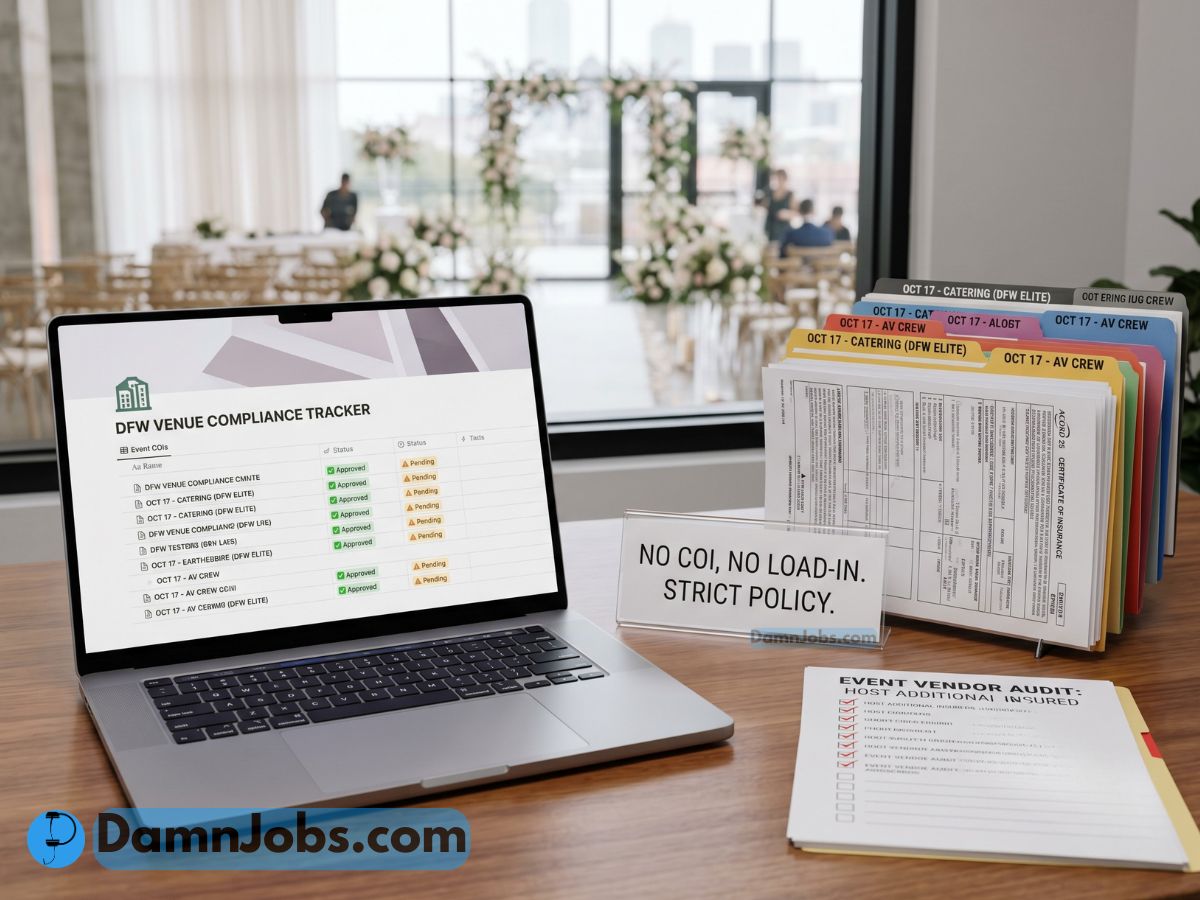
The most effective tool an event manager has is clear, upfront contractual boundaries. Write a firm compliance policy directly into your master venue rental contracts. State clearly that loading docks, kitchens, and stage setups will remain locked to any vendor who has not provided a verified, approved COI. When clients realize their timeline is on the line, they will actively help you pressure their vendors to comply.
2. Establish Digital Folders Organized by Event Date
Do not organize files solely by the vendor’s corporate name. Because vendors work at your property multiple times across different dates, organize your centralized cloud drive (SharePoint, Dropbox, etc.) by calendar date first. Use a machine-readable directory layout:
[YYYY-MM-DD] _ [ClientLastName] _ [VendorType] _ [VendorName].pdf
Example: 2026-10-17_SmithWedding_Caterer_DallasEliteCatering.pdf. This structure allows floor managers on duty during any specific weekend shift to open a single date-stamped folder and confirm that every team on-site is fully insured and authorized to work.
3. Require “Host Additional Insured” Language
Ensure your administrative staff double-checks the “Description of Operations” box on the ACORD form. It should specifically state that your venue’s legal corporate entity, its parent ownership group, and the property’s physical address are held as Additional Insureds for the entire duration of the contract, including setup and teardown hours.
Streamlining Regional Hospitality Operations
Operating a successful commercial venue in Dallas, Fort Worth, or Plano requires balancing strict safety standards with top-tier hospitality. Don’t let disorganized paperwork or last-minute vendor scrambles threaten your venue’s hard-earned reputation or bottom line.
For a complete blueprint on fixing deep operational compliance issues and organizing historical corporate files, check out our localized guide on vendor compliance paperwork cleanup for DFW contractors to discover how North Texas operators systematize their record-keeping to remain secure, audit-ready, and fully protected.